
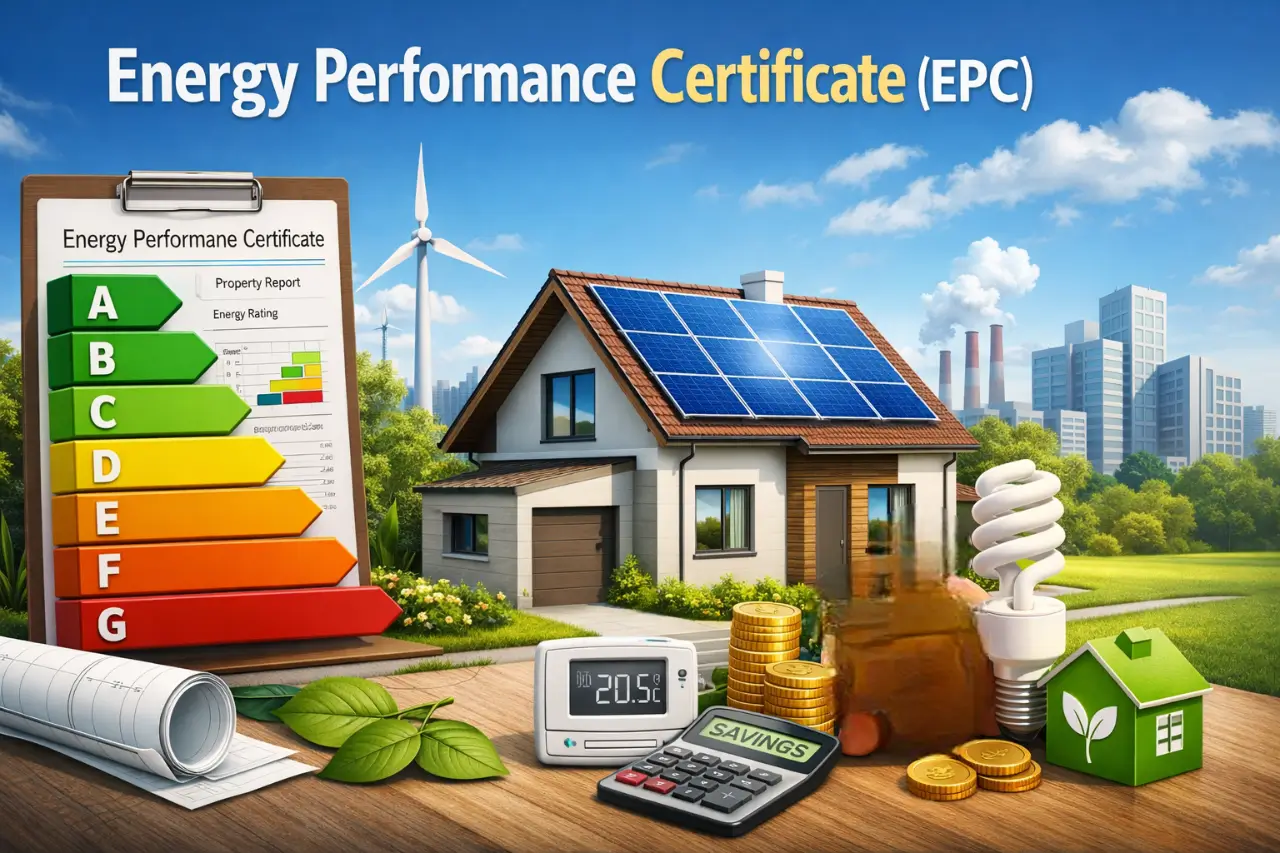
An Energy Performance Certificate (EPC) is an official document that shows how energy efficient a building is. It gives a rating from A to G, where A means very energy efficient and G means very poor efficiency. The certificate measures how much energy a building uses for heating, lighting, and hot water, and also shows carbon dioxide (CO2) emissions, which indicate the building’s impact on the environment.
EPCs are designed to help buyers, renters, and homeowners understand the energy costs of a property before moving in. It is also used by governments to encourage energy efficiency. Along with the rating, the EPC provides information about how to improve energy efficiency, which can help reduce bills and environmental impact over time.
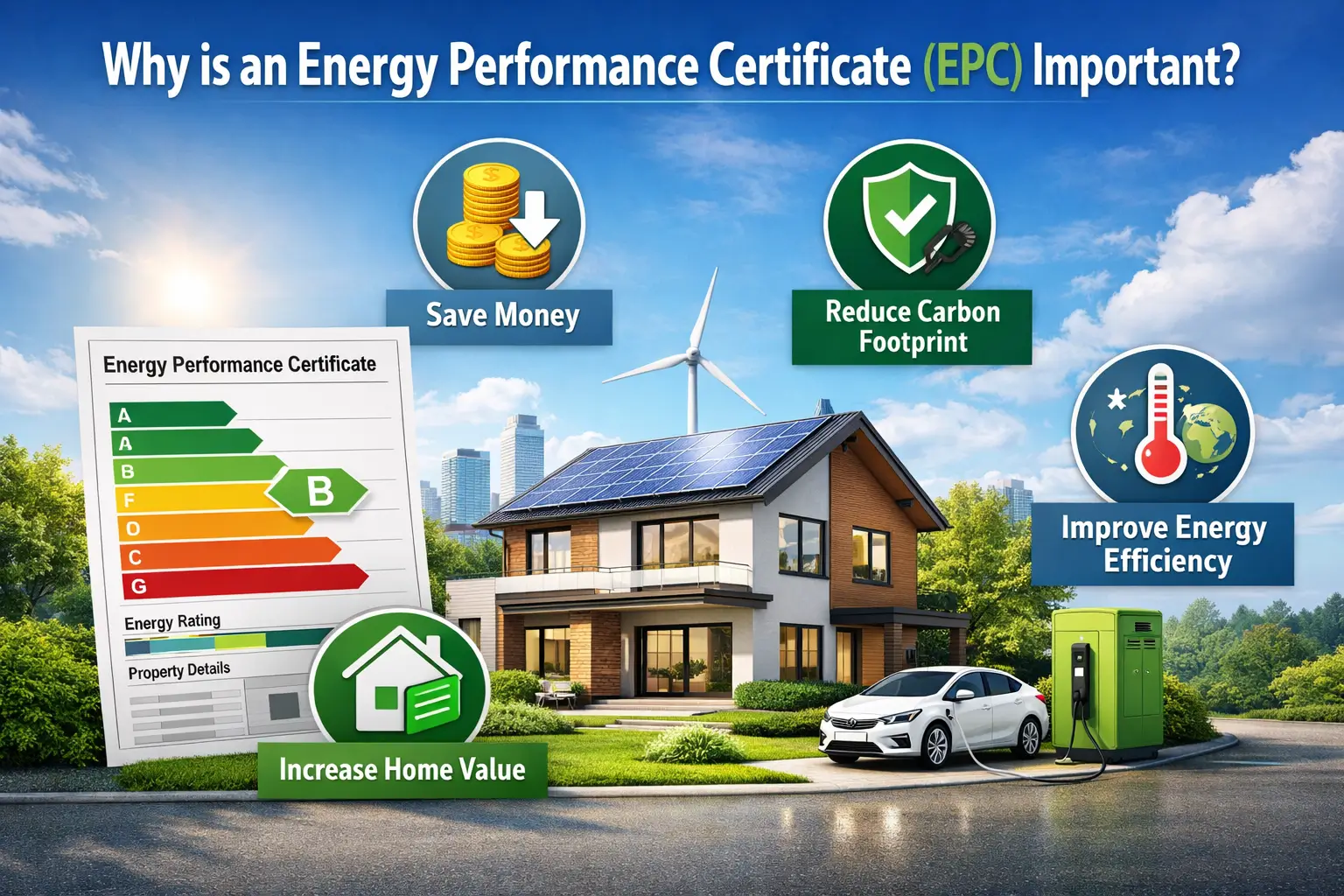
An EPC is important because it shows the cost of running a property and its environmental impact. A building with a high rating, like A or B, uses less energy, which means lower heating and electricity bills. It also produces fewer carbon emissions, helping fight climate change.
For property owners, a good EPC rating can make a house more attractive to buyers or tenants. Tenants can also compare properties based on efficiency and costs. In many countries, it is legally required to have an EPC when selling or renting a property, making it a key document in the housing market.
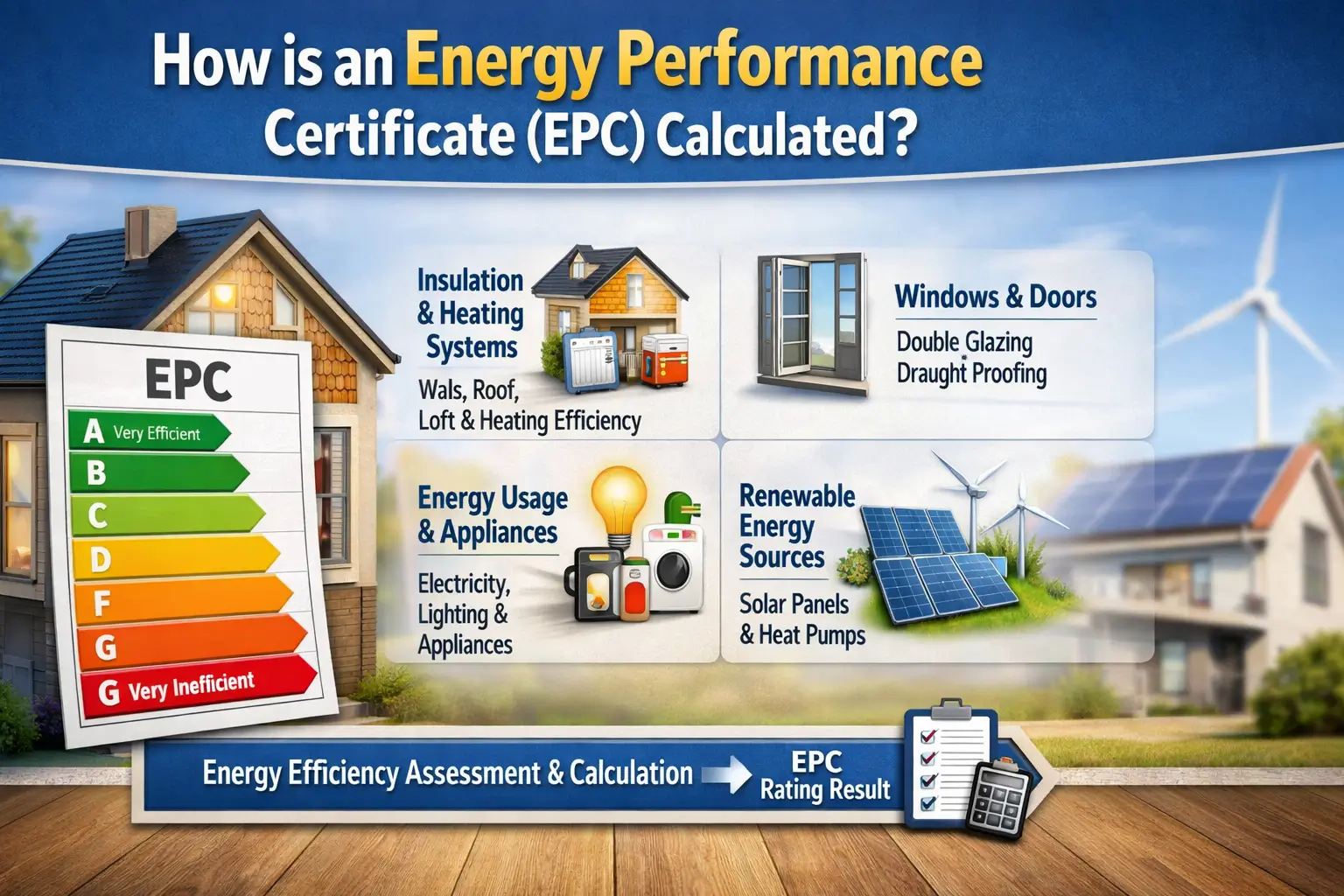
An EPC is calculated by a certified energy assessor who visits the property. They check aspects like walls, floors, roofs, windows, heating systems, and lighting to determine how efficiently the building uses energy. The assessor then uses special software to calculate the energy rating from A to G.
Along with the rating, the EPC provides recommendations for improvements, such as adding insulation, upgrading heating systems, or installing energy-efficient lighting. These suggestions help property owners or tenants reduce energy use, save money, and lower the building’s environmental impact.
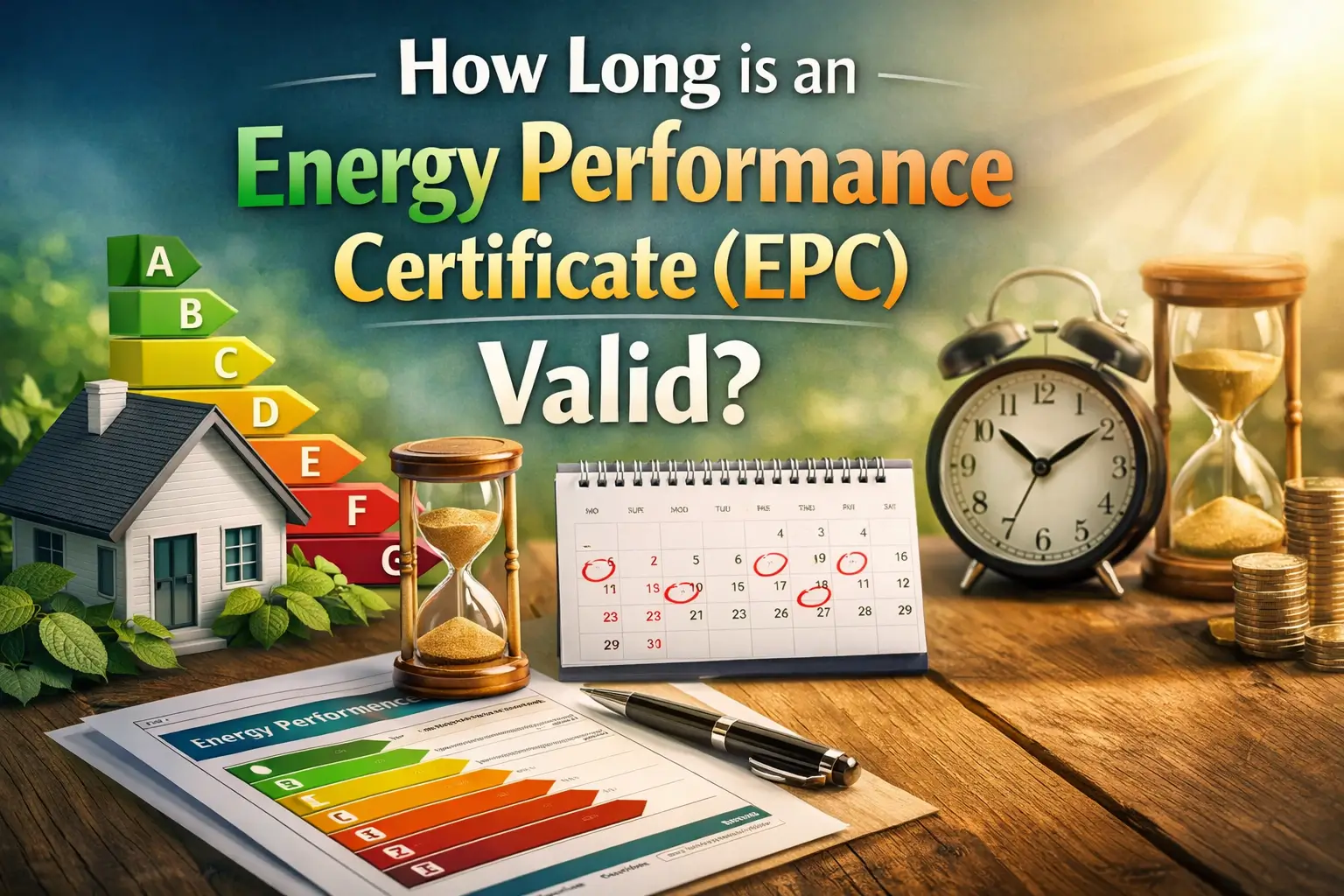
An EPC is usually valid for 10 years. After this period, a new assessment is required if the property is sold or rented. Having a valid EPC is a legal requirement in many countries, and failing to provide one can result in fines.
A good EPC rating can increase the property’s market value and make it easier to rent or sell. Low-rated properties may need energy efficiency upgrades, which not only improve the EPC rating but also reduce ongoing energy costs and environmental footprint.