
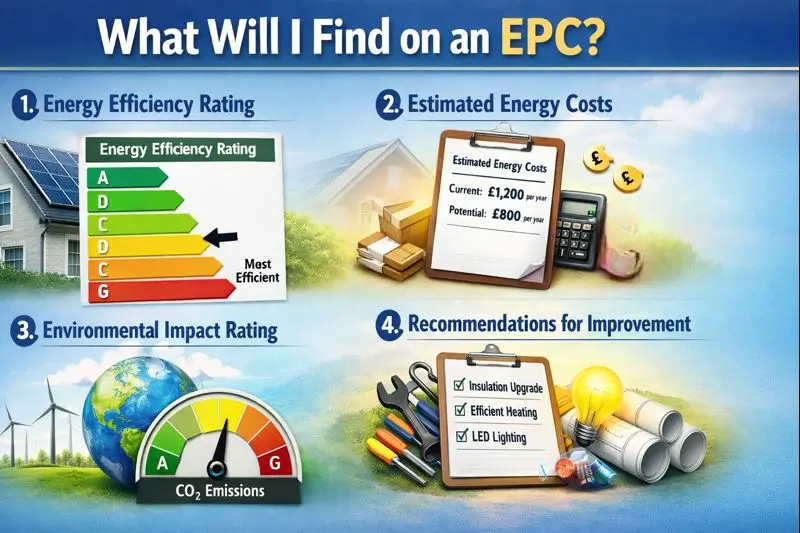
The Energy Performance Certificate clearly shows the energy efficiency rating of a property.
This rating is shown on a scale from A to G, where A means the home is very energy efficient and G means it uses a lot of energy. The rating is based on how the building uses energy for heating, lighting, and hot water.
This rating helps buyers, tenants, and landlords understand how good or bad the property is in terms of energy use.
A higher rating usually means the home stays warm for longer, needs less heating, and costs less to run. A lower rating means higher energy bills and more heat loss.
An EPC also provides estimated energy costs for the property. These costs show how much money a household may spend on energy in one year, including heating, hot water, and lighting. The values are estimates, but they give a useful idea of future expenses.
This section is very helpful when comparing different properties. Buyers and tenants can see which home may have lower energy bills before making a decision. It also helps landlords understand how energy costs may affect tenants living in the property.
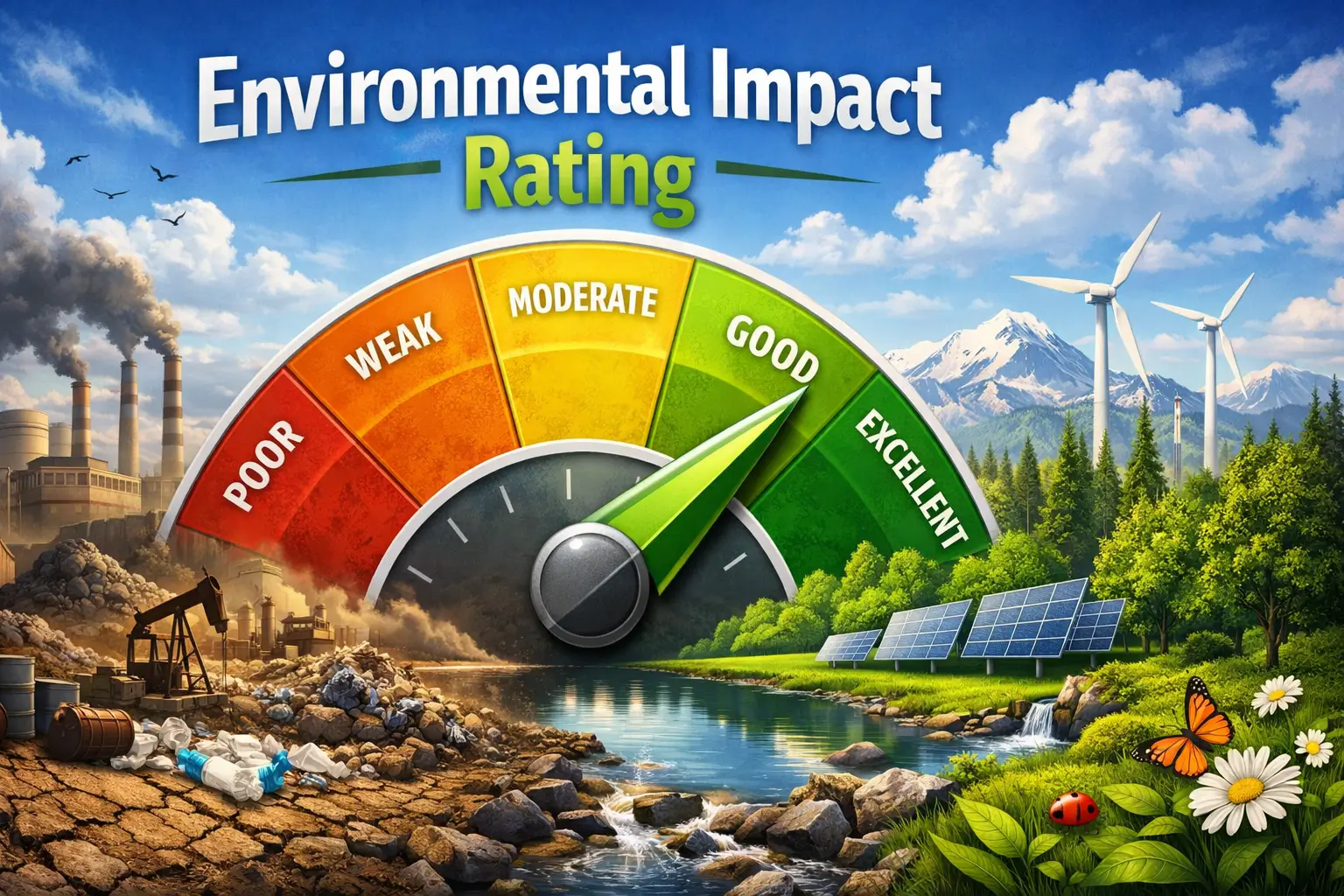
The EPC includes an environmental impact rating that focuses on carbon emissions. This rating shows how much carbon dioxide the property produces due to energy use. It is also shown on a scale from A to G, where A means low emissions and G means high emissions.
This information helps people understand how their home affects the environment. Properties with better ratings produce less pollution and are better for the planet. Many people now prefer homes with lower carbon emissions to support a cleaner and healthier environment.

One of the most important parts of an EPC is the recommendations section. This section lists ways to improve the energy efficiency of the property, such as adding insulation, upgrading windows, or installing an efficient heating system.
Each recommendation also shows possible energy savings and cost benefits. This helps homeowners plan future upgrades and understand which improvements can raise the EPC rating and reduce energy bills over time.